 Sports Jersey Embroidery Digitizing: A Complete Guide
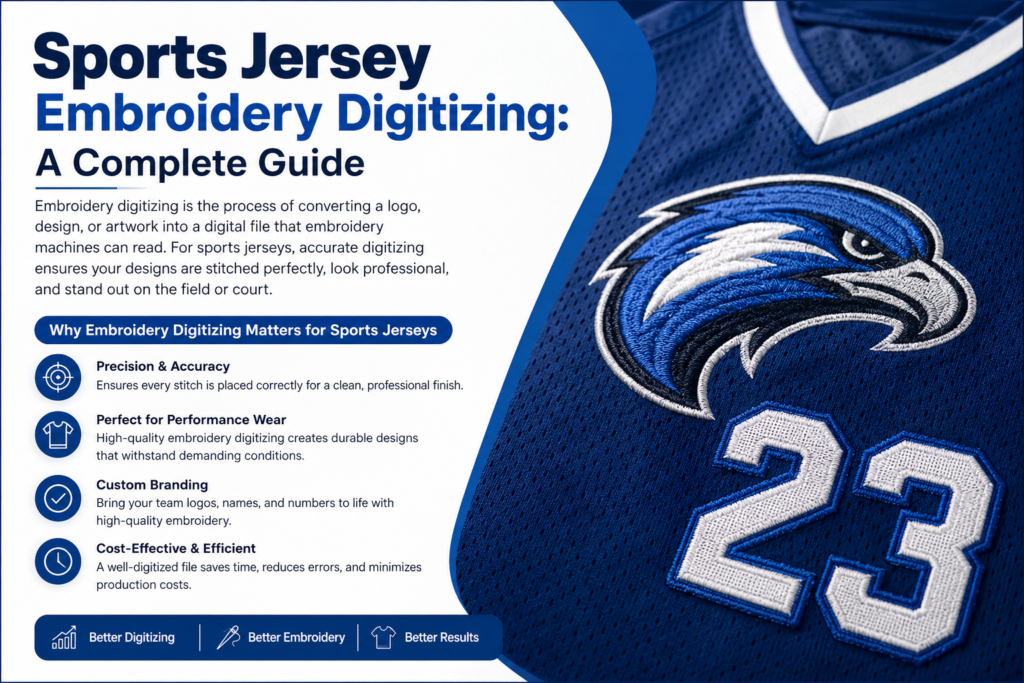
Sports jersey embroidery digitizing is a specialized niche within embroidery — one that demands more precision than a standard logo job. Team names, player numbers, and sponsor patches all need to survive stretch fabric, repeated washing, and constant movement on the field or court. Get it wrong, and numbers blur, letters distort, or stitching pulls loose after a few games. Get it right, and a jersey looks sharp on day one and still looks sharp at the end of the season. This guide covers what makes sports jersey embroidery digitizing different, how team number fonts should be handled, and what to look for in a digitizer who understands athletic wear.
What Makes Sports Jersey Embroidery Digitizing Different
Unlike a polo shirt or a cap, sports jerseys are made from performance fabrics — mesh, polyester blends, moisture-wicking material, and stretch knits. These fabrics behave very differently under a needle compared to cotton or twill, which changes how digitizing needs to be approached:
- Stretch fabric requires stronger pull compensation. Jerseys flex constantly during play, so digitized files need extra compensation built in to prevent numbers and letters from warping out of shape over time.
- Mesh and lightweight fabric need lighter stitch density. Too many stitches on thin, breathable fabric can cause puckering, stiffness, or even small tears near the stitched area.
- Durability matters more than usual. A jersey gets washed dozens of times in a season, often in team laundry rather than gentle home washing, so stitches need to be dense and secure enough to survive repeated wear and tear.
Because of these factors, sports jersey embroidery digitizing typically requires a different underlay and density setup than standard apparel digitizing — one built specifically for stretch and movement rather than a static garment.
Digitizing Team Number Fonts Correctly
Player numbers are arguably the most important — and most technically demanding — part of sports jersey embroidery digitizing. A few things separate a clean number from a sloppy one:
Bold, simple fonts work best. Overly decorative or thin fonts don’t hold up well at large sizes on stretch fabric. Block-style numbers with even stroke width digitize more cleanly and stay legible from a distance.
Consistent sizing across the team matters. Every jersey in a set should use identical number height, width, and placement so the whole team looks uniform — inconsistent digitizing files across a batch is one of the most common complaints teams have with low-quality providers.
Contrast and thread color need to be considered early. Numbers are typically digitized in a single bold color that contrasts sharply against the jersey fabric, and colorway decisions should be locked in before digitizing starts.
Column spacing and outline stitches help legibility. For back-of-jersey numbers, a satin stitch outline around a fill-stitched interior gives the crispest, most readable result at typical viewing distances.
Common Placements on Sports Jerseys
Sports jersey embroidery digitizing usually covers a handful of standard placements, each with its own sizing and technique considerations:
- Chest logo or team crest — smaller, detailed, similar to a left-chest placement but adapted for stretch fabric
- Back number — large, bold, high-visibility digitizing, usually the biggest single element on the jersey
- Player name (above the number) — arched or straight text, sized to stay legible without overwhelming the number below it
- Sleeve patches — league logos, sponsor patches, or achievement patches, often smaller and more detailed
- Front number — smaller version of the back number, sometimes combined with the team crest
Each of these placements may need its own digitized file, since sizing and stitch density typically differ between a large back number and a compact sleeve patch.
Choosing the Right Digitizer for Team Uniforms
Not every digitizing provider has real experience with athletic and team uniform work. When evaluating a provider for sports jersey embroidery digitizing, ask about:
- Experience with stretch and mesh fabrics specifically, not just standard cotton or twill garments
- Bulk consistency — can they guarantee identical number sizing and placement across an entire team roster
- Font libraries or number templates built for athletic wear, rather than generic lettering
- Fast turnaround for team orders, since sports season deadlines are often tight and non-negotiable
- Clear pricing for logo digitizing and multi-placement jersey sets, visible on their price list
For background on how team jersey design and numbering conventions evolved, resources on squad numbers and jerseys as a garment offer useful context on why consistency and legibility became standard practice across sports.
Caring for Embroidered Jerseys
Good sports jersey embroidery digitizing only pays off if the finished jersey is cared for properly afterward. A few simple habits extend the life of embroidered numbers and logos significantly:
- Turn jerseys inside out before washing to reduce direct friction on the stitched areas during the wash cycle.
- Use cold water and a gentle cycle whenever possible, since heat and aggressive agitation are the main causes of premature thread wear.
- Avoid high-heat drying. Air drying or low-heat tumble drying keeps stitches from loosening or shrinking unevenly against stretch fabric.
- Skip fabric softener on embroidered areas, as it can build up on stitches over time and dull the raised, textured look of quality embroidery.
Teams that follow these basics typically get a full season — often several seasons — of clean, legible numbers before any touch-up or redigitizing is needed.
Frequently Asked Questions
Does sports jersey embroidery digitizing cost more than regular logo digitizing? It can, depending on the number of placements needed per jersey. A single chest logo is priced similarly to standard digitizing, but a full set with front number, back number, name, and sleeve patches involves multiple files, which affects overall cost.
Can the same digitized file be used for different jersey sizes? Generally yes for the design itself, but number and text sizing sometimes needs slight adjustment for youth versus adult jerseys to keep proportions looking correct.
Is sublimation better than embroidery for sports jerseys? Both have a place. Embroidery gives numbers and logos a raised, durable, premium feel that holds up extremely well over a season, while sublimation is better suited to full-jersey graphics and gradient designs. Many teams combine both techniques on the same jersey.
How far in advance should teams order digitizing for a new season? Ordering digitizing files a few weeks before the season starts avoids the rush-order surcharge and gives time for revisions if number sizing or placement needs adjusting before bulk production begins.
Final Thoughts
Sports jersey embroidery digitizing isn’t just standard logo work applied to a different garment — it’s a specialized process that accounts for stretch fabric, bold legible numbering, and the durability a full season of wear and washing demands. Teams and apparel businesses that work with a digitizer experienced in athletic wear avoid the common pitfalls of warped numbers, inconsistent sizing, and stitching that doesn’t hold up past the first few games.
If you’re preparing jerseys for an upcoming season and want digitizing built specifically for team uniforms, get in touch with our team or place your order — we’ll walk you through number sizing and placement before your bulk order goes into production. You can also check our related guide on uniform embroidery digitizing for broader workwear branding tips.