Embroidery digitizing turnaround time is one of the first questions most customers ask before placing an order — and for good reason. Whether you’re a small business owner waiting on uniform logos, an embroiderer with a client deadline, or a print shop juggling multiple orders, knowing how long digitizing actually takes helps you plan production and avoid last-minute stress. This guide breaks down what affects embroidery digitizing turnaround time, what’s realistic to expect, and how you can speed things up without sacrificing quality.
What Is Embroidery Digitizing Turnaround Time?
Turnaround time refers to the period between submitting your logo or artwork for digitizing and receiving a ready-to-stitch file (DST, PES, EXP, or another machine-readable format). It’s different from production time on the embroidery machine itself — digitizing is the design and file-preparation stage that happens before a single stitch is sewn.
For most professional digitizing services, standard turnaround falls somewhere between a few hours and 24–48 hours, depending on complexity and order volume. Rush options can bring that down significantly, sometimes to just a few hours, though usually at an added cost.
What Affects Embroidery Digitizing Turnaround Time
Several factors influence how quickly a digitized file can be delivered:
- Design complexity: A simple text logo digitizes much faster than a detailed multi-color illustration with fine gradients, small text, or intricate shading.
- File size and stitch count: Larger designs with higher stitch counts naturally take longer to digitize accurately and test for quality.
- Fabric type: Digitizing for tricky fabrics — like fleece, leather, or stretch knits — often requires extra adjustments for pull compensation and stabilization, which adds time.
- Number of placements: A single left-chest logo is quicker than digitizing the same design for multiple placements (chest, sleeve, back) at different sizes.
- Revisions requested: If you need color changes, resizing, or placement adjustments after the first draft, each round adds to the total time.
- Order queue and time of submission: Files submitted during peak hours or high-volume seasons (like the holiday rush) may take slightly longer than usual.
Typical Embroidery Digitizing Turnaround Time by Order Type
While every digitizing provider sets its own timelines, here’s a general industry benchmark businesses can expect for embroidery digitizing turnaround time:
Standard single-logo orders are usually completed within same-day to 24 hours for straightforward designs under 15,000 stitches.
Complex or multi-color designs with fine detail, small text, or unusual fabric requirements can take 24–48 hours, especially if test stitching is involved to confirm quality before delivery.
Bulk or multi-placement orders (several logos, sizes, or garment types at once) typically take longer, often 2–4 business days, since each variation needs its own file.
Rush orders can often be completed in a few hours, which is useful when a production deadline is approaching fast.
How to Speed Up Embroidery Digitizing Turnaround Time
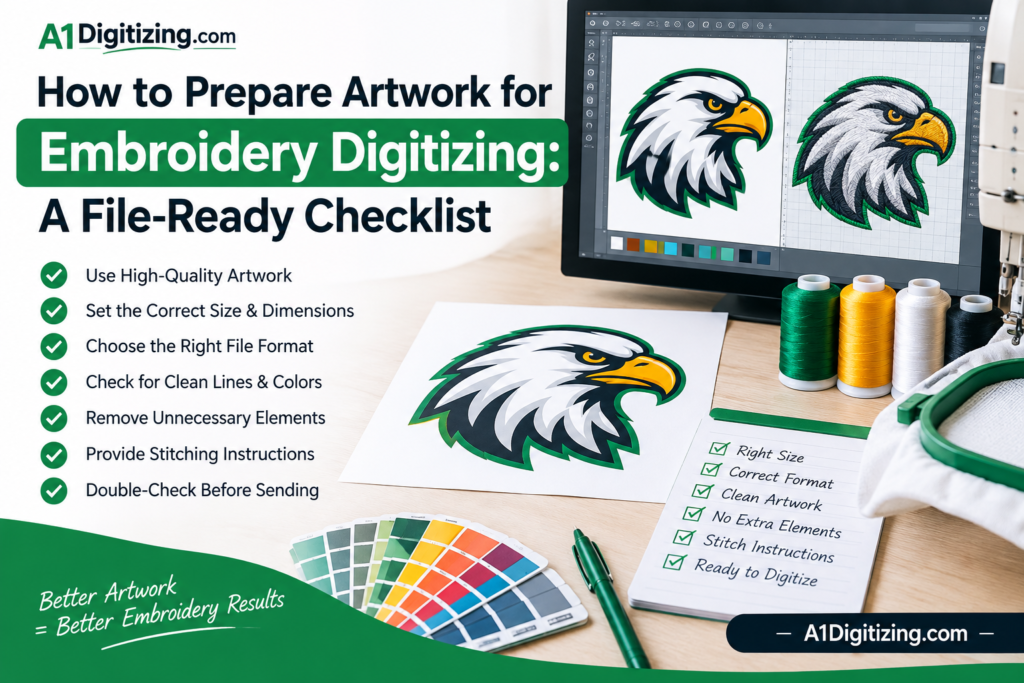
- Submit high-resolution, vector-based artwork. Blurry or low-quality logos force digitizers to spend extra time reconstructing details, which slows the process down.
- Specify garment and fabric type upfront. Telling your digitizer exactly what the design will be stitched on (polo, cap, jacket, hi-vis vest) avoids back-and-forth clarification later.
- Confirm placement and size in the first request. Changing placement after digitizing starts often means redoing parts of the file.
- Limit revision rounds by reviewing carefully. Take time to check the digitized preview thoroughly before approving.
- Choose a rush service when deadlines are tight. Most professional digitizers offer expedited options — it’s worth paying slightly more when timing matters more than cost.
- Work with a digitizer who reuses your files. For repeat uniform or bulk orders, a digitizer who keeps your previous files on record can turn around reorders much faster than starting from scratch each time.
Why Turnaround Time Shouldn’t Come at the Cost of Quality
It’s tempting to chase the fastest possible embroidery digitizing turnaround time, but speed without accuracy can be a false economy. A rushed file with poor underlay, incorrect pull compensation, or mismatched stitch density often needs to be redone — costing more time overall than if it had been digitized carefully the first time. The goal isn’t just a fast file; it’s a fast and accurate file that stitches correctly on the first try, every time. For a closer look at how digitizing quality is achieved technically, resources on machine embroidery explain how stitch types and file structures affect the finished result.
Efficient turnaround is also closely tied to how well a workflow is organized behind the scenes. In broader manufacturing and service contexts, lead time management principles — reducing unnecessary delays without cutting corners — apply just as much to digitizing as they do to any production process.
Choosing a Digitizer With Reliable Turnaround
When evaluating a digitizing service based on turnaround time, look beyond just the advertised hours. Ask about:
- Whether rush service is genuinely available, or just advertised
- How revisions are handled and whether they add to the delivery time
- Whether the provider offers bulk-order timelines for uniform or logo digitizing projects
- Clear, upfront delivery estimates before you commit — visible on their price list or provided during ordering
At A1 Digitizing, turnaround time is treated as a core part of the service, not an afterthought — with standard and rush options available depending on your deadline, including for badge-style logo digitizing and bulk uniform batches.
Frequently Asked Questions About Embroidery Digitizing Turnaround Time
Does turnaround time include shipping or physical embroidery? No. Embroidery digitizing turnaround time only covers the time to create the stitch file. Actual embroidery production, printing, or shipping of finished garments is a separate step with its own timeline, which businesses should factor in separately when planning delivery to customers.
Can turnaround time change during holidays or peak seasons? Yes. Just like most creative and production services, digitizing providers often see higher order volume around back-to-school season, the holidays, and sports team signup periods. Submitting orders a few extra days early during these windows helps avoid delays caused by a fuller queue.
Is faster always better? Not necessarily. A same-day turnaround is great when you genuinely need it, but rushing every order can mean less time for quality checks. For non-urgent designs, standard turnaround usually offers the best balance of speed and stitch accuracy.
Do reorders take as long as new designs? Usually not. If a digitizer has your file on record from a previous order, reorders or resizes can often be completed much faster than digitizing a brand-new logo from scratch — another reason to stick with one reliable provider for ongoing uniform or bulk programs.
Final Thoughts
Understanding embroidery digitizing turnaround time helps you plan production schedules realistically and avoid unnecessary delays. By submitting clear artwork, confirming details upfront, and choosing a digitizer that balances speed with accuracy, most businesses can get reliably fast turnaround without compromising on stitch quality.
If you have a deadline coming up and want a realistic embroidery digitizing turnaround time estimate for your next order, get in touch with our team or place your order directly — we’ll confirm delivery timing before you commit.