Uniform embroidery digitizing is the process that turns your company logo into a stitch file your embroidery machine can actually sew — and for businesses, getting it right matters more than most people realize. When a customer walks into your shop, sees your delivery driver, or shakes hands with your field technician, your uniform is doing silent marketing work. A clean, well-digitized logo on a polo shirt, jacket, or safety vest instantly signals professionalism. A poorly digitized one — with puckered fabric, uneven stitching, or a blurry logo — does the opposite.
Unlike a one-off gift or a single cap, uniform and workwear embroidery is about consistency at scale. Whether you’re ordering 20 polo shirts for a small team or 500 safety jackets for a warehouse crew, the digitizing file created at the start determines how every single piece turns out — for months or years of reorders. Here’s what business owners, HR managers, and procurement teams should understand before placing that order.
Why Uniform Embroidery Digitizing Matters More Than Casual Embroidery
Workwear isn’t just clothing — it’s often functional, worn in tough conditions, and washed repeatedly. This changes the digitizing requirements in a few important ways:
- Durability over decoration: A logo on a hoodie you wear occasionally can tolerate looser stitching. A logo on a uniform that’s washed weekly for two years needs tighter, more resilient stitch density.
- Fabric variety: Businesses rarely use one fabric. Polos, twill work shirts, high-vis vests, fleece jackets, and coveralls all behave differently under the needle, and each needs its own digitized file — not a single design stretched across all of them.
- Consistency across large batches: A retail brand with 15 locations needs the exact same logo placement and size on every single shirt. Good digitizing locks that consistency in, regardless of who’s operating the embroidery machine.
Key Fabric and Placement Considerations
Different work garments call for different digitizing approaches:
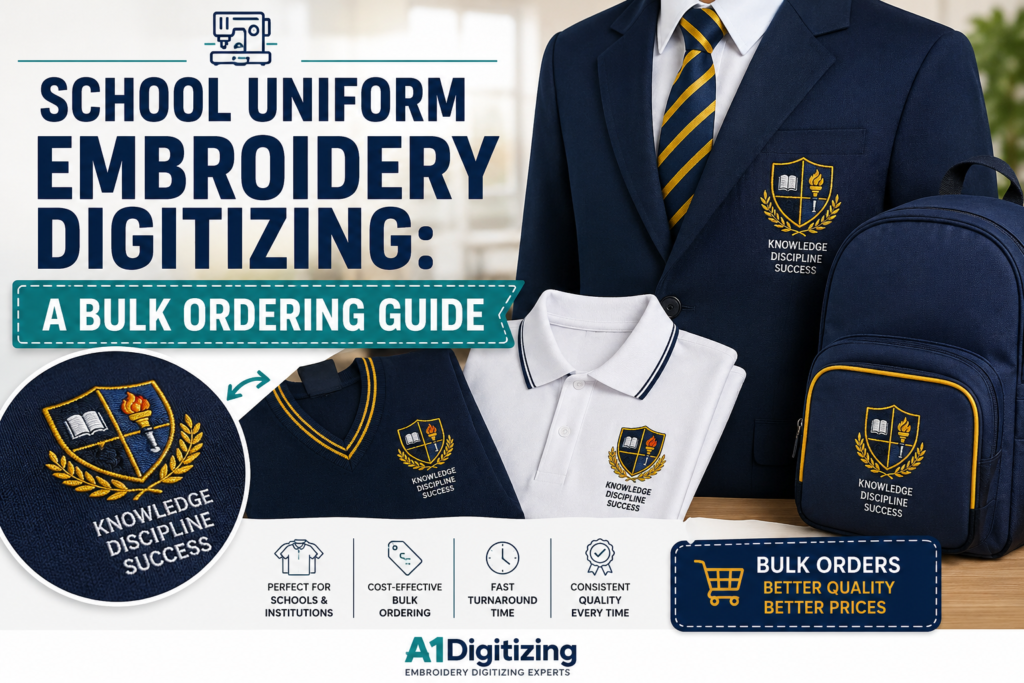
Polo shirts and button-downs typically use left-chest logo placement, usually kept to a compact size (around 3–4 inches wide) so it doesn’t compete with collars or buttons. Lighter, tighter stitching works best here to avoid a stiff, uncomfortable patch feel.
Jackets and outerwear can handle bolder, larger designs — often full-back logos for delivery or field service brands — since the fabric is thicker and holds more stitches without puckering.
High-visibility workwear (safety vests, hi-vis jackets) is a special case. Digitizers need to work around reflective tape and mesh panels, often using higher stitch density and stabilizers suited to synthetic, breathable fabric so the logo stays legible without compromising the garment’s safety function. Businesses that supply high-vis gear should also be aware of relevant safety apparel standards — the Occupational Safety and Health Administration outlines general PPE requirements that can influence where and how branding is applied.
Coveralls and industrial workwear often need reinforced backing and lower stitch counts in high-friction areas (like near pockets or seams) to prevent premature wear.
Bulk Consistency: The Real Challenge
The biggest difference between a single embroidered item and a uniform program is repetition. A digitizing file that looks perfect on a sample piece has to reproduce identically across dozens or hundreds of garments, often across multiple fabric types and machine brands. This requires:
- A digitized file optimized for multiple stitch counts and machine types, not just one embroidery machine
- Clear color-matching notes (thread brand/number, not just “blue”) so reorders months later still match
- Proper file formats (DST, PES, EXP, etc.) so any embroidery shop or in-house machine can run the design without re-digitizing from scratch
This is also where many businesses get overcharged or under-served — either paying for a fresh digitizing job every time they reorder, or receiving inconsistent results because the original file wasn’t built with reproducibility in mind.
Branding Standards Matter Too
For companies with established brand guidelines, embroidery digitizing needs to respect logo proportions, minimum size thresholds for legibility, and approved color variations — much like print branding does. Organizations such as industry standards bodies increasingly publish guidance on consistent brand application across physical products, which is worth reviewing if your uniform program spans multiple departments or franchise locations. Resources like the American National Standards Institute offer broader context on standardization principles that many corporate branding and apparel programs draw from.
Choosing the Right Uniform Embroidery Digitizing Partner
When selecting a digitizing service for ongoing uniform or workwear needs, look for:
- Experience across fabric types — not just t-shirts, but twill, fleece, mesh, and high-vis material
- Fast turnaround for repeat and bulk orders, since uniform programs rarely allow long lead times
- File storage and reorder support, so you’re not paying to redigitize the same logo every season
- Clear pricing, especially for placements like badge-style chest logos or full logo digitizing across multiple garment types
At A1 Digitizing, uniform embroidery digitizing is treated as a program, not a one-time task — with files built for repeat accuracy across fabrics and machines. You can review current rates on our price list or place an order directly for your next uniform batch.
Final Thoughts
Uniform embroidery digitizing isn’t just about making a logo look good once — it’s about making sure it looks the same, holds up the same, and reorders the same, order after order. Businesses that treat digitizing as a foundational branding investment, rather than an afterthought, end up with uniforms that consistently represent their brand well, garment after garment, year after year.
If you’re setting up a uniform or workwear embroidery program and want digitizing built for scale and consistency, get in touch with our team — we’ll walk you through fabric-specific recommendations before you commit to a bulk order.