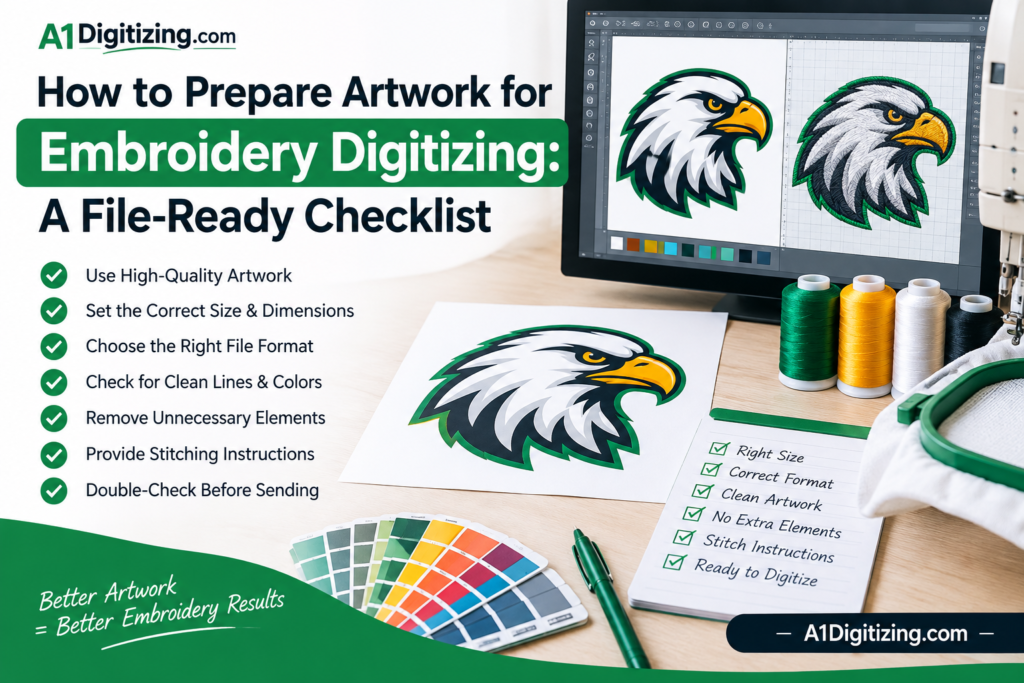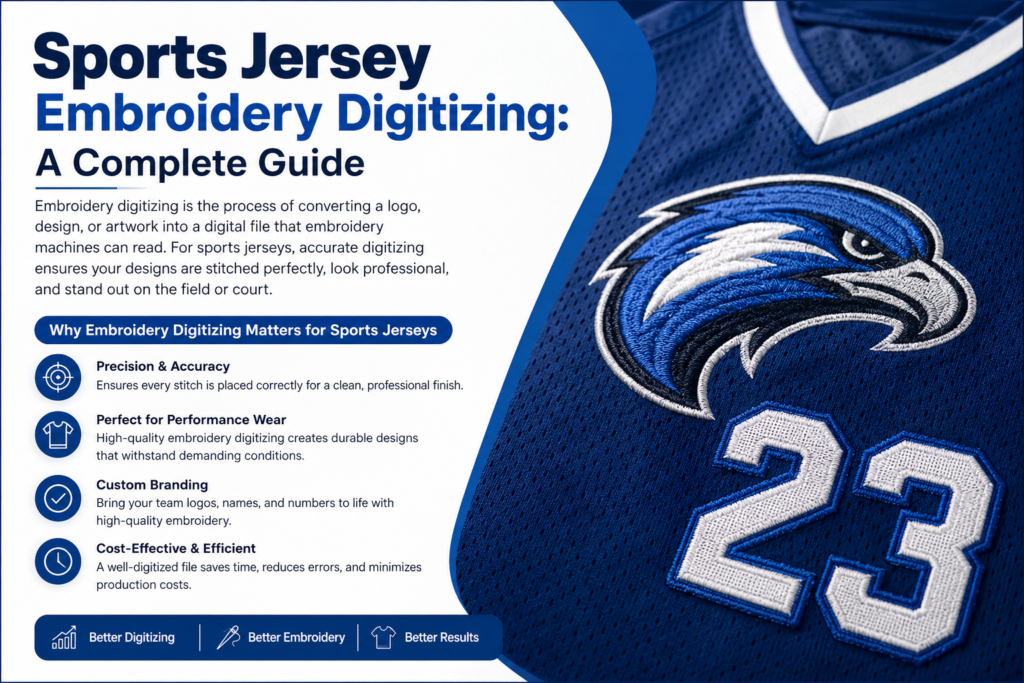
How to Get Perfect Embroidery on Any Fabric is one of the most common questions asked by embroidery business owners, apparel brands, and custom clothing companies. Whether you’re embroidering polo shirts, caps, jackets, fleece, or performance wear, achieving professional results requires the right digitizing, stabilizers, and embroidery techniques. In this guide, you’ll learn how to get perfect embroidery on any fabric while avoiding common mistakes that affect stitch quality.
Many embroidery businesses struggle with issues like puckering, thread breaks, distorted designs, and poor stitch quality. The good news is that these problems can often be avoided with the right approach. In this guide, you’ll learn how to get perfect embroidery on any fabric and why professional digitizing plays such an important role in the final result.
Understanding How Fabric Affects Embroidery
One of the biggest mistakes beginners make is assuming that every fabric behaves the same way. In reality, each material reacts differently to stitches.
For example:
- Cotton is stable and easy to embroider.
- Polyester can stretch and shift during stitching.
- Fleece has a thick surface that can hide details.
- Caps require specialized digitizing techniques.
- Softshell jackets often need stronger underlay support.
Because of these differences, embroidery designs must be adjusted according to the fabric being used.
Start With High-Quality Digitizing
The foundation of perfect embroidery is professional digitizing. Even the most advanced embroidery machine cannot compensate for a poorly digitized file.
Professional digitizers carefully adjust:
- Stitch density
- Pull compensation
- Underlay settings
- Stitch direction
- Stitch sequence
These adjustments ensure that the design stitches correctly on the intended fabric.
Learn more about professional digitizing services here:
https://a1digitizing.com/embroidery-digitizing-services/
If you’re new to embroidery digitizing, this guide can help:
https://a1digitizing.com/what-is-embroidery-digitizing/
Choose the Right Stabilizer
A stabilizer provides support during embroidery and prevents the fabric from shifting.
Common stabilizer types include:
Cut-Away Stabilizer
Best for:
- Polo shirts
- T-shirts
- Stretch fabrics
Tear-Away Stabilizer
Best for:
- Cotton fabrics
- Stable materials
Water-Soluble Stabilizer
Best for:
- Towels
- Fleece
- Textured fabrics
Using the wrong stabilizer can lead to puckering and distorted embroidery.
Adjust the Design for the Fabric
Professional digitizers know that one embroidery file should not be used for every fabric.
For example:
Caps
Cap embroidery requires special center-out stitching techniques.
https://a1digitizing.com/cap-digitizing/
Left Chest Logos
Small details and text must be optimized for readability.
https://a1digitizing.com/left-chest-logo-digitizing/
Jacket Back Designs
Large designs require balanced stitch distribution.
https://a1digitizing.com/jacket-back-digitizing/
3D Puff Embroidery
Foam embroidery requires special digitizing settings to create a raised effect.
https://a1digitizing.com/3d-puff-digitizing/
Use the Correct Needle and Thread
Many embroidery issues occur because of incorrect needle selection.
How to Get Perfect Embroidery on Any Fabric
General recommendations:
- 75/11 needles for lightweight fabrics
- 80/12 needles for standard embroidery
- 90/14 needles for heavy fabrics
Thread quality is equally important. Low-quality thread can cause frequent breaks and inconsistent stitching.
Investing in quality embroidery supplies helps maintain production efficiency and professional results.
Test Before Production
Even experienced embroidery shops perform test runs before starting large orders.
A sample stitch-out allows you to check:
- Design accuracy
- Thread colors
- Stitch density
- Fabric performance
Testing can save significant time and money by identifying problems before production begins.
Avoid Common Embroidery Mistakes
Many embroidery problems are caused by simple mistakes.
Using Low-Resolution Artwork
Poor artwork leads to poor digitizing results.
Ignoring Fabric Type
A design that works on cotton may not work on fleece.
Skipping Sample Runs
Testing helps catch problems before they become expensive mistakes.
Why Professional Digitizing Matters
Businesses often focus on embroidery machines while overlooking digitizing quality.
The truth is that digitizing has a greater impact on embroidery quality than most people realize.
Professional digitizers understand:
- Fabric behavior
- Stitch mechanics
- Machine limitations
- Design optimization
That’s why businesses that prioritize quality digitizing consistently achieve better results.
Explore professional logo digitizing solutions:
https://a1digitizing.com/logo-digitizing/
The Role of Modern Technology
Today’s embroidery industry benefits from advanced software and machine technology. However, technology alone cannot guarantee perfect embroidery.
Human expertise remains essential for:
- Complex logos
- Small lettering
- Fabric-specific adjustments
- Production optimization
For more information about embroidery as a craft and industry, visit:
https://en.wikipedia.org/wiki/Embroidery
Why Businesses Choose A1 Digitizing
A1 Digitizing helps embroidery businesses achieve professional results through accurate and reliable digitizing services.
Our team focuses on:
- Clean stitch paths
- Optimized stitch counts
- Fabric-specific adjustments
- Fast turnaround times
Whether you need logo digitizing, cap digitizing, jacket back designs, or vector artwork conversion, we provide solutions designed for production success.
Visit our website:
Pricing information:
https://a1digitizing.com/price-list
Contact our team:
https://a1digitizing.com/contact-us/
Final Thoughts
How to Get Perfect Embroidery on Any Fabric
Getting perfect embroidery on any fabric requires more than simply loading a design into a machine. Success comes from understanding fabric behavior, choosing the right stabilizer, using quality materials, and most importantly, starting with professionally digitized files.
When every part of the process is optimized, your embroidery will look cleaner, last longer, and create a stronger impression on customers. Whether you’re working with caps, polos, jackets, fleece, or performance apparel, professional digitizing remains the key to achieving consistently high-quality embroidery results.