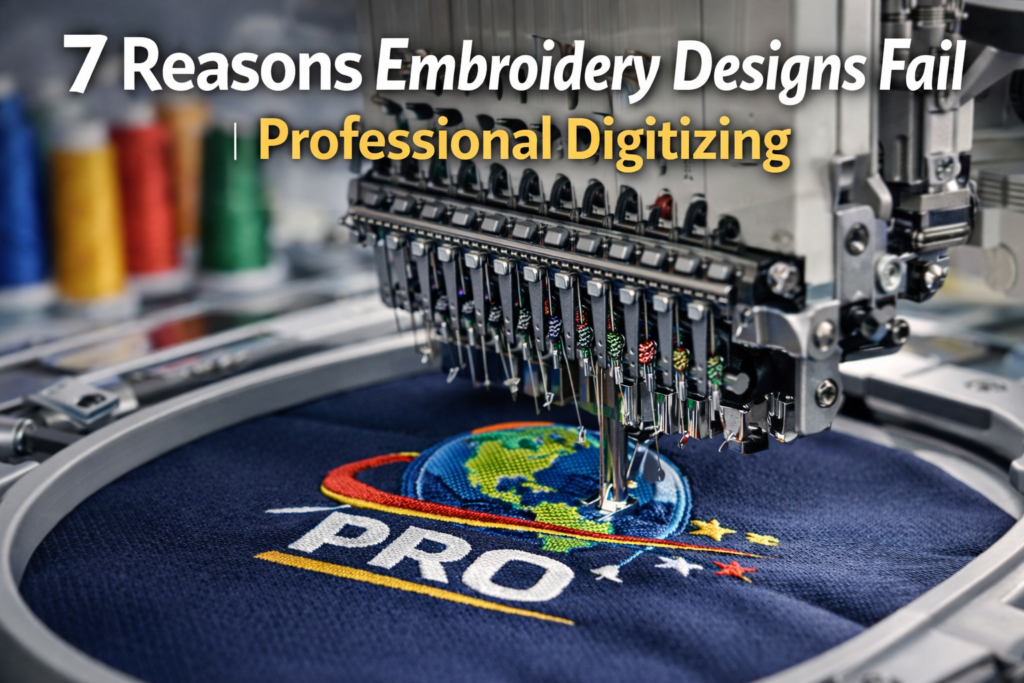
Professional digitizing is the foundation of clean, smooth, and machine-ready embroidery designs used by commercial embroidery businesses across the USA.
In this guide, we explain seven shocking reasons embroidery designs fail and how professional digitizing permanently fixes these problems.
Why Professional Digitizing Matters
Professional embroidery digitizing is more than converting an image into stitches. It is a technical process that considers:
-
Fabric type and stretch
-
Stitch direction and sequencing
-
Thread tension and density
-
Machine movement and stability
Poor digitizing leads to production issues that waste time, materials, and money.
1. Incorrect Stitch Density
Incorrect stitch density is the most common reason embroidery designs fail.
-
Too many stitches cause thread breaks and machine slowdowns
-
Too few stitches make designs look weak and unfinished
How Professional Digitizing Fixes This
Professional digitizing adjusts stitch density based on the fabric, garment type, and design size to ensure clean coverage without stress on the machine.
2. Wrong or Missing Underlay Stitches
Underlay stitches act as the foundation of embroidery. Without proper underlay:
-
Fabric shifts during stitching
-
Designs lose alignment and shape
Professional digitizing uses the correct underlay type to stabilize the fabric and improve stitch quality.
3. No Pull Compensation Applied
All fabrics pull slightly during embroidery. When pull compensation is not applied:
-
Circles become oval
-
Borders appear uneven
Professional digitizing applies precise pull compensation so designs stitch accurately on all fabrics.
4. Using the Same Design for Every Fabric
A single digitized file cannot perform well on caps, jackets, polos, and patches.
Each fabric reacts differently to stitching. Professional digitizing customizes designs specifically for:
-
Caps and structured hats
-
Left chest logos
-
Jackets and thick garments
-
Patches
5. Poor Stitch Direction and Pathing
Incorrect stitch direction causes uneven light reflection and a rough appearance. Poor pathing results in:
-
Excessive trims
-
Unnecessary machine jumps
-
Longer production times
Professional digitizing creates smooth stitch flow for a clean, professional finish.
6. Over-Reliance on Auto-Digitizing Software
Auto-digitizing software may be fast, but it lacks precision and fabric awareness. These tools often ignore critical details, leading to designs that fail on embroidery machines.
Professional digitizing combines advanced software with manual expertise and industry experience.
7. No Machine Testing Before Delivery
Many digitized designs are delivered without real machine testing. This leads to costly re-runs, wasted garments, and unhappy customers.
Professional embroidery digitizing includes testing to ensure files stitch correctly on commercial embroidery machines.
Why Cheap Digitizing Costs More in the Long Run
Low-cost digitizing may seem appealing, but it often results in:
-
Damaged garments
-
Machine downtime
-
Increased thread usage
-
Customer dissatisfaction
Professional embroidery digitizing is an investment that saves money by preventing production failures.
Why Choose A1 Digitizing for Professional Digitizing
At A1 Digitizing, we specialize in high-quality embroidery digitizing for the U.S. market.
✔ Over 10 years of industry experience
✔ Fast turnaround times
✔ Machine-tested embroidery files
✔ All major formats (DST, EMB, PES, JEF, and more)
✔ Expertise in caps, patches, jackets, and left chest logos
Our goal is simple: deliver embroidery files that stitch perfectly on the first run.
How Professional Digitizing Improves Production Efficiency
Professional embroidery digitizing not only improves stitch quality but also increases overall production efficiency. When embroidery files are properly digitized, machines run smoother, stitch faster, and require fewer stops for thread breaks or adjustments.
Well-digitized embroidery designs reduce unnecessary trims and jumps, allowing embroidery machines to complete jobs in less time. This means higher output, lower labor costs, and consistent results across multiple garments.
For embroidery businesses working with bulk orders, professional embroidery digitizing plays a critical role in meeting deadlines and maintaining quality standards.
Professional Digitizing for Commercial and Custom Orders
Whether you are handling large commercial runs or one-off custom orders, professional embroidery digitizing ensures reliable results. Commercial embroidery requires consistency across dozens or hundreds of garments, while custom embroidery demands accuracy and detail.
Professional embroidery digitizing adapts stitch settings, underlay, and density to match the specific job requirements. This flexibility allows embroidery shops to handle a wide range of customer requests without compromising quality.
Final Recommendation for Embroidery Businesses
Investing in professional embroidery digitizing is one of the smartest decisions an embroidery business can make. High-quality digitizing reduces errors, protects expensive garments, and improves customer satisfaction.
Instead of fixing failed designs and re-running jobs, businesses can focus on growth, faster turnaround times, and repeat customers.
If you want embroidery designs that stitch cleanly, run smoothly, and deliver professional results every time, professional digitizing is the solution.
Many professionals rely on Wilcom embroidery digitizing software for advanced professional embroidery digitizing workflows.
Website: https://a1digitizing.com/
Email: Or***@**********ng.com